
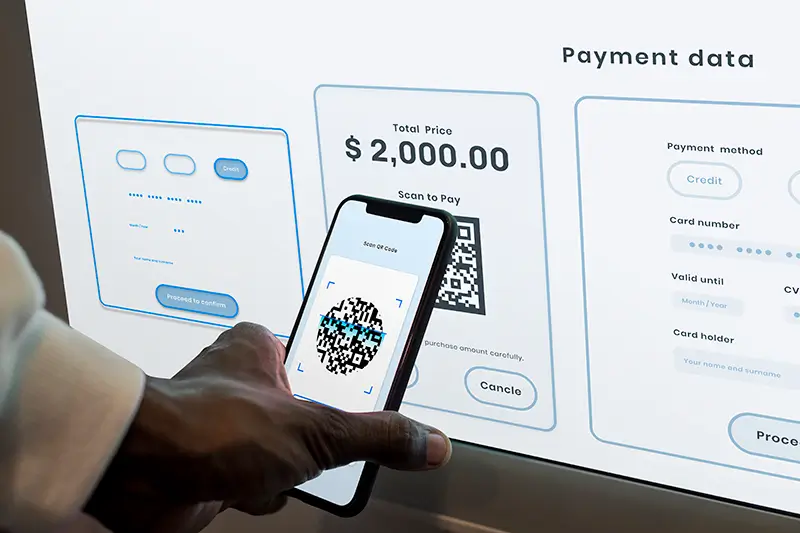
Did you know that businesses lose an estimated 5-10% of annual revenue on payment and invoice fraud?
Imagine preventing much of that loss before a payment is ever approved. That’s exactly where AI for invoice and payment risk detection steps in: not as a sci-fi fantasy, but as a pragmatic, high-precision shield that identifies risk patterns, flags anomalies, and helps people make the right decision faster.
Invoice and payment fraud is no longer limited to forged documents or obvious scams. Modern fraud schemes are increasingly sophisticated and often appear legitimate on the surface. Familiar vendor names, legitimate-looking invoices, and seemingly routine payment requests can conceal significant risk.
Today’s fraudsters no longer rely solely on forged invoices or obvious scams. They exploit increasingly sophisticated techniques such as:
- Fake vendors created using stolen or publicly available business information
- Legitimate vendors impersonated with altered banking details
- Duplicate invoices submitted across multiple departments
- Inflated charges concealed within complex line items
- Shell companies posting as trusted suppliers
As organizations expand, vendor networks become complicated, which makes it even harder for financial teams to identify fraudulent activities through manual review alone.
Traditional controls (segregation of duties, manual spot checks, and static rules) still matter, but they fall short in terms of keeping up with the ever-mutating schemes such as invoice tampering, fake vendors, account takeover, duplicate billing and social-engineering led payment redirections.
AI delivers the missing ingredient: adaptive detection that learns from data and spots threats before they cause damage. Organizations are increasingly adopting AI invoice fraud prevention solutions to strengthen financial controls while reducing manual intervention.
Why Vendor Identity Validation Matters in Payment Risk Detection
Most invoice fraud doesn’t begin with a suspicious invoice, but with a compromised vendor identity.
Once a fraudulent vendor or manipulated supplier record enters your system, every future transaction becomes a potential financial risk. Unfortunately, many organizations still rely on:
- Static rule-based verification
- One-time vendor onboarding checks
- Manual review of emails, documents, and bank details
These approaches are reactive, fragmented, and heavily dependent on human attention. More importantly, they rarely evolve as fraud tactics change.
AI reinforces payment risk detection by continuously validating vendor identities throughout the entire transaction lifecycle—not just during onboarding. This ongoing verification creates an additional layer of protection before invoices are approved or payments are released.
This layered protection is most effective when it intercepts risk at multiple checkpoints, not just once at onboarding:
- During vendor onboarding
- When vendor or client details change
- At invoice submission
- Before payment authorization
How Does AI Identify What Humans Fail to Notice?
At its core, AI-powered fraud prevention combines machine learning, natural language processing (NLP), graph analytics, and behavioral intelligence to transform raw financial data into actionable risk signals.
- Multi-Source Identity Verification: AI cross-verifies vendor and client data against registration databases, historical transaction records, communication metadata, and behavioral patterns, forming the backbone of identity checks that a single document or data point could never support.
- Data Fusion: AI analyzes invoices, bank statements, payment histories, vendor master records, email trails, and metadata (IP addresses, device fingerprints). The wider the data view, the sharper the detection.
- NLP for Document Understanding: Modern NLP models are armed to extract structured fields (amounts, dates, vendor names) from messy invoices and compare them against expected formats and historical submissions.
- Behavioral Baselining: Machine learning models establish “normal” payment behavior, thereby enabling early payment risk detection for deviations like an unusual bank account or an abnormal invoice cadence.
- Network/Graph Analysis: Fraud often emerges from relationships: a cluster of invoices pointing to a single shell entity, or many vendors sharing a bank account. Graph algorithms surface suspicious linkages that rule-based systems miss.
- Anomaly Scoring & Risk Prioritization: Each invoice/payment is scored for risk in real time, thereby enabling teams to focus on high-impact cases instead of drowning in false positives.
Five Ways AI Stops Fraud Before It Happens
Let’s now find out how AI detects invoice fraud:
- Promptly Identifying Fake/Altered Invoices: By comparing invoice text, formatting, and embedded metadata against historical documents and vendor profiles, AI flags subtle tampering like changed amounts, swapped line items, or inconsistent invoice numbers that humans might otherwise overlook.
- Catching Payment Diversion Attempts: AI matches payee bank accounts with known vendor accounts, flags newly added or changed accounts and correlates unusual change requests with external signals such as email domain differences or sudden IP changes.
- Preventing Duplicate and Inflated Billing: Pattern recognition spots duplicates across time and across vendors, catching scenarios where the same work is invoiced multiple times under different document IDs.
- Spotting Social Engineering and CEO-fraud Attempts: By analyzing linguistic cues and email metadata, AI identifies impersonation attempts (for example, urgent payment requests appearing to come from executives) and routes suspicious communications for enhanced review.
- Real-time Blocking and Escalation: When risk crosses a configurable threshold, AI can automatically halt a payment, require dual approval, or create a high-priority investigation ticket; thereby stopping bad payments before funds even move.
What Are the Best Practices to Implement AI for Invoice and Payment Risk Detection?
- Start with the Highest Risk Workflows: Pilot AI on suppliers or payment corridors with the largest fraud exposure. Quick wins build trust and data volume for model improvement.
- Integrate, Don’t Replace: Keep human expertise in the loop. AI should augment investigators, not replace them. Human review of edge cases reduces false positives and retrains the model.
- Prioritize Data Hygiene: AI’s accuracy depends on clean vendor masters and complete transaction histories. Invest in deduplication, canonicalization, and reference data alignment first. AI is only as powerful as the data it processes, and fragmented or outdated records limit even the most advanced models.
- Design Transparent Models: Use explainable AI approaches so investigators understand why a transaction was flagged, as this accelerates resolution and auditability.
- Measure the Right KPIs: Track prevented fraud amount, false positive rate, mean time to investigate, and investigator workload reduction to demonstrate the ROI of AI for payment risk detection initiatives.
Real-world Scenarios Where AI Makes the Difference
- Vendor Impersonation: A fraudster submits an invoice using the name of a trusted supplier but changes the destination bank account.
Instead of checking only the invoice itself, AI compares historical payment behavior, communication history, vendor identity, and account ownership. The inconsistency is immediately detected, enabling finance teams to investigate before payment is released.
- Duplicate Invoice Fraud: The same invoice is submitted to multiple departments with small modifications to invoice numbers or dates.
AI identifies semantic and structural similarities across invoices, recognizing duplicate billing attempts even when traditional matching rules fail.
- Synthetic Vendor Creation: A shell company is established using a combination of genuine and fabricated business information.
By analyzing onboarding behavior, credibility signals, historical activity, and relationships across multiple data sources, AI identifies unusual patterns long before payments begin.
Beyond Fraud Prevention: Additional Business Benefits of AI
Although preventing fraud is the primary objective, AI-driven invoice and payment risk detection provides several long-term operational advantages:
- Faster vendor onboarding without compromising security
- Reduced manual verification and review effort
- Improved audit readiness and regulatory compliance
- Greater confidence across procurement and accounts payable workflows
- Scalable protection as transaction volumes continue to grow
Rather than simply preventing financial losses, AI helps finance teams operate faster, more accurately, and with greater confidence.
Why Collaborate with DeepKnit AI?
DeepKnit AI (DK AI) was built for complex, high-value workflows like medical record analysis and financial document processing, which makes it an ideal partner for invoice processing.
A few reasons to collaborate:
- Domain-Tuned Models: DeepKnit AI’s models are trained on diverse document types and real-world fraud patterns, so they detect both textbook scams and novel, creative fraud attempts.
- End-to-End Integration: From data ingestion and document parsing to risk scoring and case management, DK AI offers modular components that plug into existing ERP and treasury systems.
- Explainable Alerts: DK AI surfaces the signals behind each score viz, text snippets, account history anomalies, and network ties which helps investigators act quickly and confidently.
- Human-in-the-Loop Workflows: The platform is designed to make human reviewers more efficient, offering prioritized queues, templated investigations, and continuous model improvement from investigator feedback.
- Compliance-first Architecture: Secure by design, DeepKnit AI handles sensitive payment data with enterprise encryption, role-based access, and audit trails.
The Future of Fraud Prevention Starts before Payment
Invoice and payment fraud is a moving target. Rules and human checks will always play a role, but to truly stop fraud before it happens you need an adaptive, data-driven approach. AI gives you that capability: it expands visibility, reduces the noise, and turns reactive investigations into proactive prevention.
Ready to cut fraud losses and protect your cash flow? Work with DeepKnit AI.
Wondering How to Reduce Payment Risks?
Strengthen your defenses with DeepKnit AI—stop fraud before payments go through.
Contact Us